


Every conversation about the modern workforce starts in the same place.
AI is taking jobs. College is too expensive. Nobody wants to work anymore. Companies can’t find talent.
Those things are real. But they’re not the problem.
They’re symptoms.
The real problem is simpler - and harder to admit:
We broke the story of work.

For the last two generations, we sold a single narrative as if it were a universal truth:
Go to college. Get a degree. Climb the ladder. Retire comfortably.
If you don’t follow that path, something must be wrong with you.
But millions of people looked up one day and realized:
The ladder was overcrowded
The debt was permanent
The payoff was uncertain
And the work didn’t feel like theirs
So they started drifting.
Not lazy. Not entitled. Just loose and jazzy with a swing feel.
Meanwhile, the jobs that actually keep the country running - technicians, specialists, inspectors, operators, healthcare technologists - kept showing up. Quietly. Reliably. Without applause.
We called them “alternatives.”
That word did more damage than we realize.
Alternative means second-best. Fallback. What you do if your Plan A fails.
But these jobs aren’t alternatives. They’re infrastructure.
Here’s the quiet truth no one likes to say out loud:
The modern workforce isn’t broken because people don’t want to work. It’s broken because we stopped telling the truth about what work is worth.
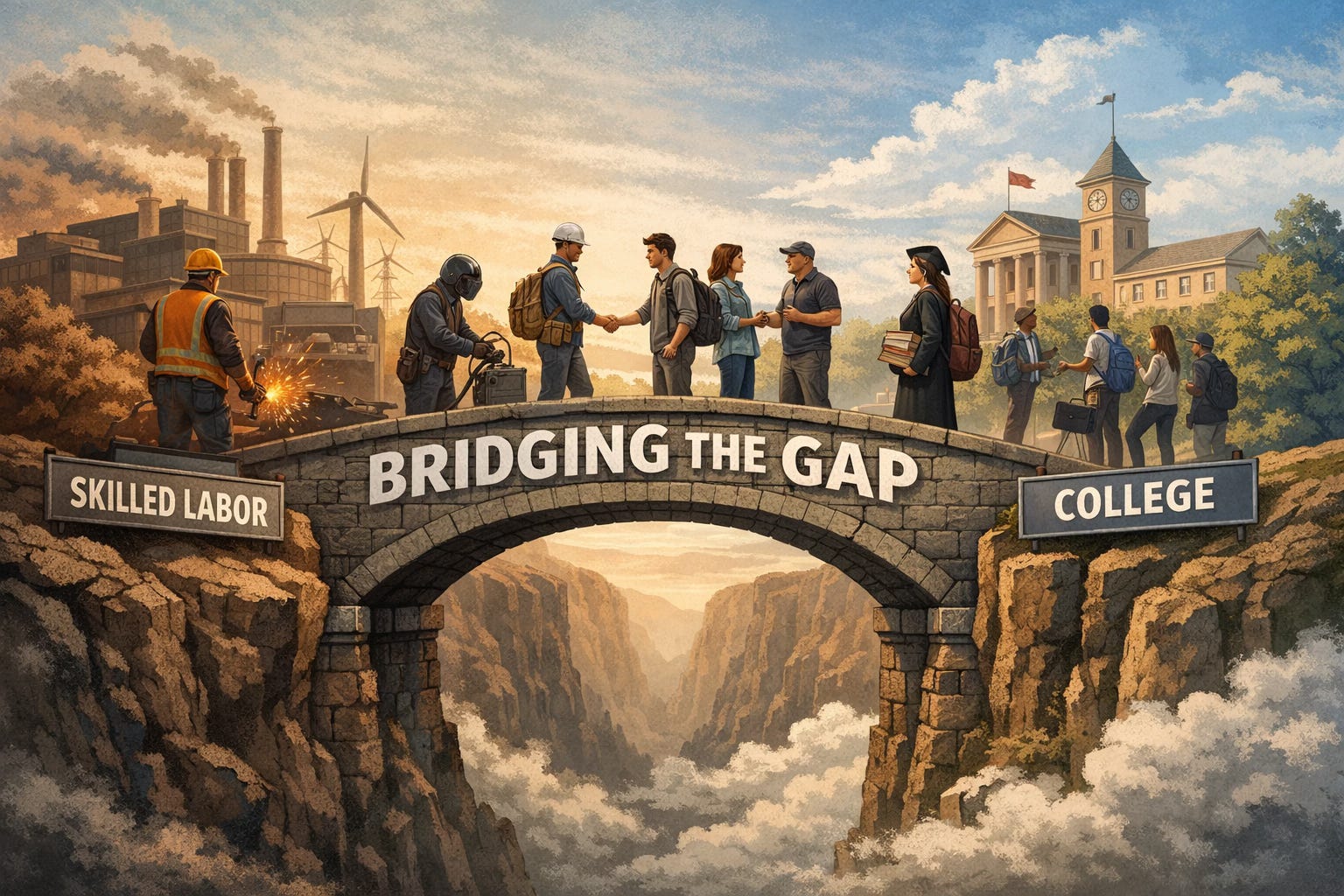
We prestige knowledge over skill. We celebrate potential over competence. We reward credentials over contribution.
And then we act surprised when people feel disconnected from what they do all day.
AI didn’t create this crisis. AI just exposed it.
Because when machines get better at abstractions, the work that endures is the work rooted in reality, systems, tools, environments, and people.
The future of work isn’t about replacing humans.
It’s about remembering why we needed them in the first place.
Until we fix the story about dignity, skill, pride, and purpose, no amount of reskilling programs, subsidies, or technology will save us.
You can’t optimize a system that doesn’t know what it values.
And right now, the workforce doesn’t need motivation.
It needs a better map.
Spot on. Thanks for giving voice to it, Jon!