


Back in the olden times, 1998, Spencer Johnson wrote a little business parable called ‘Who Moved My Cheese?’ It was a cute story about two mice, Sniff and Scurry, and two tiny people, Hem and Haw. They live in one of those mazes that all mice in science experiments live in, and they had found a mother lode of cheese. They all depend on that pile of cheese, which just represents the things people want in life, like success, comfort, money, relationships, or security.
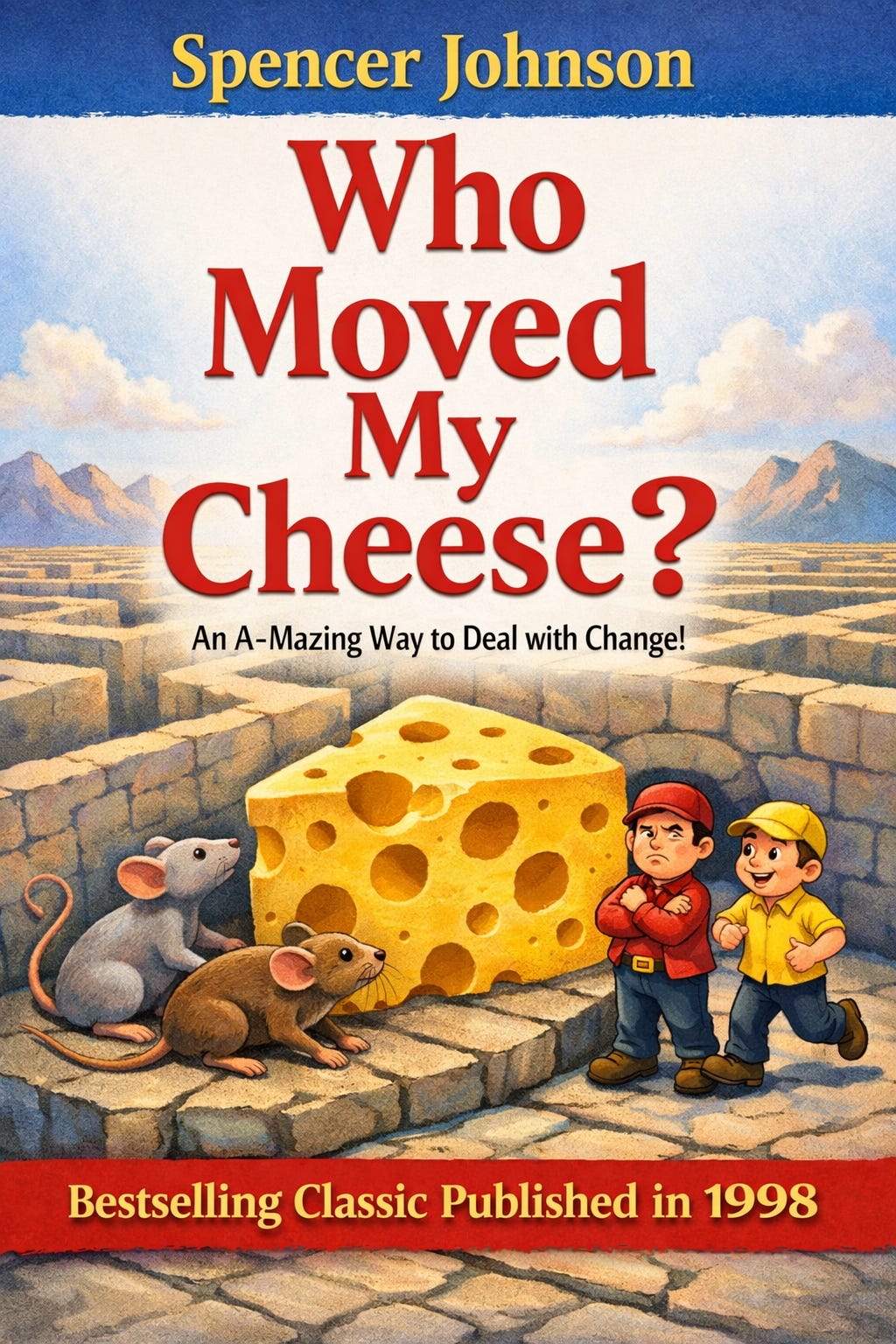
Sniff and Scurry never really settle in. They spend a part of every day continuing to seek out new cheese - just in case. But Hem and Haw see no reason to leave. They believe after a time that they are entitled to this cheese. Of course, one day, they saunter back to their pile of comfort and abundance to find that it’s gone. The mice kind of shrug and just go looking for new cheese. Hem resists, complains, and wants things to go back to the way they were. Haw is afraid at first, but eventually realizes that adapting is better than staying stuck.
Don’t be Hem.
That’s the moral. You aren’t entitled to any cheese, and you should be grateful for the cheese you find, but don’t just take it for granted. You have to constantly be seeking new sources of cheese. There are so many examples of this in business - we get complacent about marketing because sales are strong. We stop upskilling because we believe our job will always be around. We don’t invest in innovation because we have a product moat. Then, inevitably, somebody moves the cheese. We lose a big customer, get displaced, or have a competitor come out of nowhere with a better product that takes our market share.
But the same applies to life in general. We make a plan, execute, and then life throws a curveball at us. I can’t count the number of times I’ve had to change course. It’s never fun, but to sit back and demand “why me!?” doesn’t change what needs to be done.
Adaptability is a learned skill. It’s a muscle you can exercise, and each time, it gets a little easier. Did I mention it’s never fun? It is, though, the one skill that is innate in us humans. We’ve been adapting to geography, ecology, economies, and culture. So, take some time to survey the landscape to predict what damage the AI tsunami will bring and expand your horizons.
We told factory workers, “Learn to code!” as though that was an obvious transition. It may be time to look at reversing that advice. Coders are quickly going to find themselves in three camps. The first will be those who know AI and how to work with it to create value for their employers. The second will be those who use their skills to start new companies on their own, now that bringing a viable product to market is MUCH cheaper and faster than ever before. The third will be those who need to reskill and find another way to create value. Maybe that’s a gray collar career. Maybe it’s something else, but employers are going to need 90% fewer coders. Anthropic just released this chart. (h/t, Brendan Lammond)
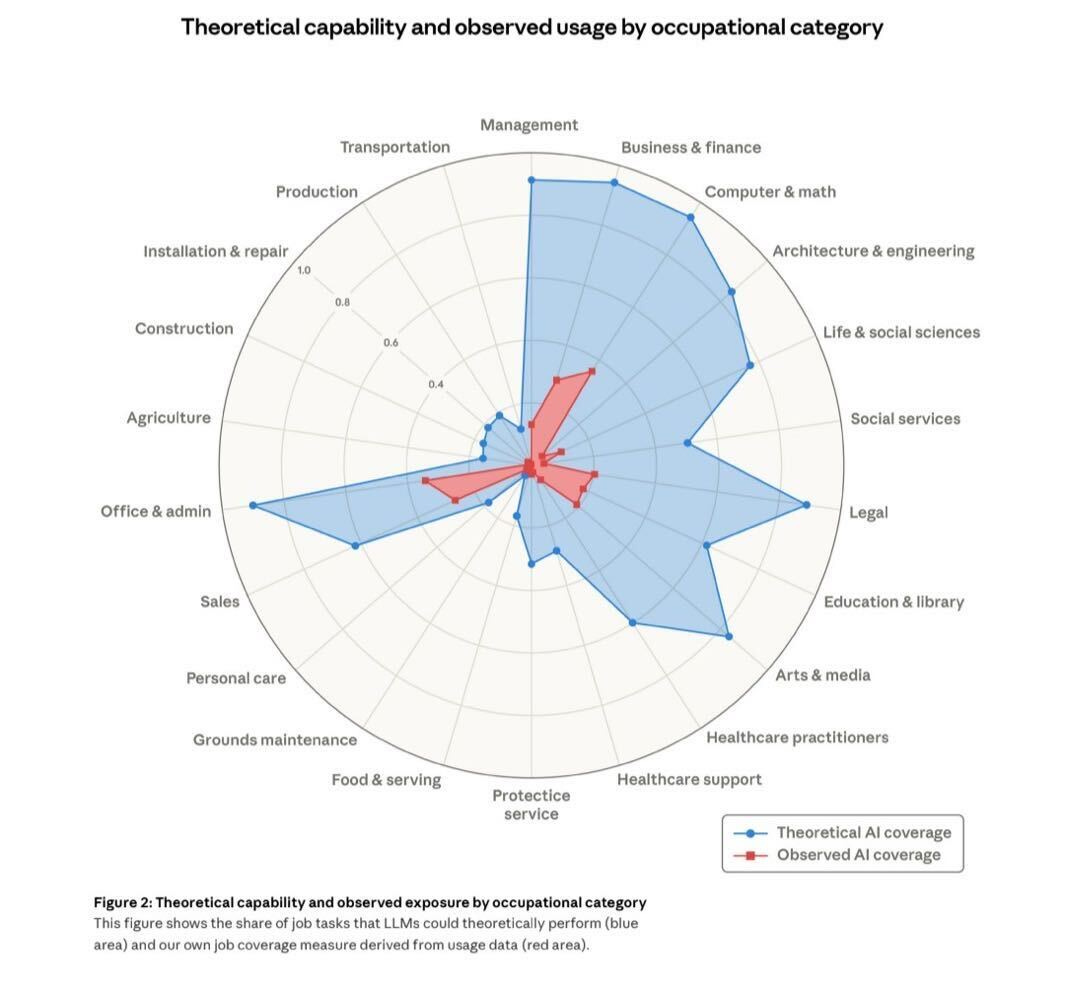
What it shows are the theoretical percentage of tasks that AI can do in 21 career groups in blue and the percentage currently being done in red. It shows the “AI resistant” careers in stark relief.
Opportunity no longer knocks
We al know the old saw. But it seems like it no longer applies. Opportunity isn’t out there knocking on doors anymore. Today, it’s doomscrolling Instagram and can’t be bothered. So, you have to knock on Opportunity’s door, and maybe it will answer.
For newer job seekers, I cannot stress enough how futile it will be to spam your resume to employers. There are hundreds if not thousands of applicants for each job. Your best bet is to choose some target companies and network your way in. “Sure, Don, just call the hiring manager and smooth talk her?” No - find employees doing the job you want. Ask them how they like working there. Ask them what their day is like. First, you may find that the company you thought was perfect is kind of a dysfunctional mess. Maybe that’s just in your department, or maybe it’s company wide. Talk to the salespeople. Talk to anyone in that company that you can find. It takes work. Finding a job is a full-time job.
One of my partners recently invited a recent aerospace grad that I know to a pitch event, just to network. I introduced him to an amazing guy doing really cool work in drone engineering, and Ryan wound up with a job the next day. I don’t even think it’s hit him how fantastic this opportunity is to grow, even though it’s not paying what he thought. He’s young and can pay his dues, but this experience will be transformative. All this after months of sending out resumes and following up by email. Times have changed.
Meagan Skerchock was going to pursue an engineering career, and after she talked with someone about the job she wanted, she changed her mind, and so she founded a company called Perspectiv (getperspectiv.com) that teaches kids about what it’s really like to work in a given job. She’s passionate and dedicated, and she never looked back.

The big takeaway here is that the old rules are obliterated. The job market is tough. Times are changing. I know that creates anxiety, but one of the best ways to mitigate that is taking control. It’s not complicated - but it is uncomfortable and can be hard work. Part of that is assessing where you planned to be and whether that’s going to be useful in the future. If you’re in school for a subject that’s heavily blue above, ask yourself some hard questions.
Do I even know what my job will be like?
Am I suited for this work, and passionate about it, or am I pursuing pay or status?
Would I be happier in a job where I’m creating a tangible work product - a physical thing?
What could I learn to do with my personality and skillset that employers would pay me to do?
There are a lot of questions along these lines, but the cheese has been moved. Life is not going to come to you.
If you’re a parent coaching your child through these discussions, talk about this article with them. Wipe the slate clean of what ‘the plan’ was and look objectively at the landscape. Don’t be afraid to let go of the old paradigm, because it no longer serves.
I wish that weren’t so, but it is.
The hopeful message here is that there are tons of paths forward that can bring satisfaction and meaning - it just may not look like you thought it would.